Every commercial enterprise runs on electricity. From lighting and HVAC to data systems and heavy machinery, your electrical network is the silent engine behind daily operations.
Choosing the right cable plays a major role in keeping your operations smooth, safe, and fully compliant with building standards. A well-informed decision helps prevent unexpected downtime, supports a safer working environment, and ensures your electrical system performs reliably as your business grows. In short, smart choices behind the walls create stability, efficiency, and long-term peace of mind for your entire operation.
So how do you make those smart choices? This guide breaks down what project managers, contractors, and business owners need to know when to select power cables for commercial use. To make a confident and informed decision, it’s essential to first understand the types of commercial power cables and where each performs best.
What Separates Commercial Cables from Residential Ones?
Before diving deeper, let us clear the confusion. Commercial cables aren’t just “bigger house wires”—they’re built for a different level of performance.
- Higher Power Loads: Commercial cables are designed to handle significantly greater electrical demand from heavy equipment, large lighting systems, and continuous operation.
- Greater Durability: These cables are constructed to withstand harsher environments, including heat, cold, moisture, vibration, and mechanical stress.
- Complex Installations: Commercial systems often involve three-phase power distribution, longer cable runs, and integration with backup systems such as generators and UPS units.
- Compliance with Electrical Codes and Standards: Installations must comply with applicable local and international standards, such as those issued by the International Electrotechnical Commission (IEC) and regional regulatory authorities. These standards define requirements for safety, fire performance, load capacity, and system reliability, especially in high-occupancy environments.
Decoding the Most Common Types of Commercial Power Cables
Understanding cable types is the foundation of making the right decision. Each cable is engineered for specific environments, risks, and electrical demands.
Armoured Power Cables: The Rugged Workhorses
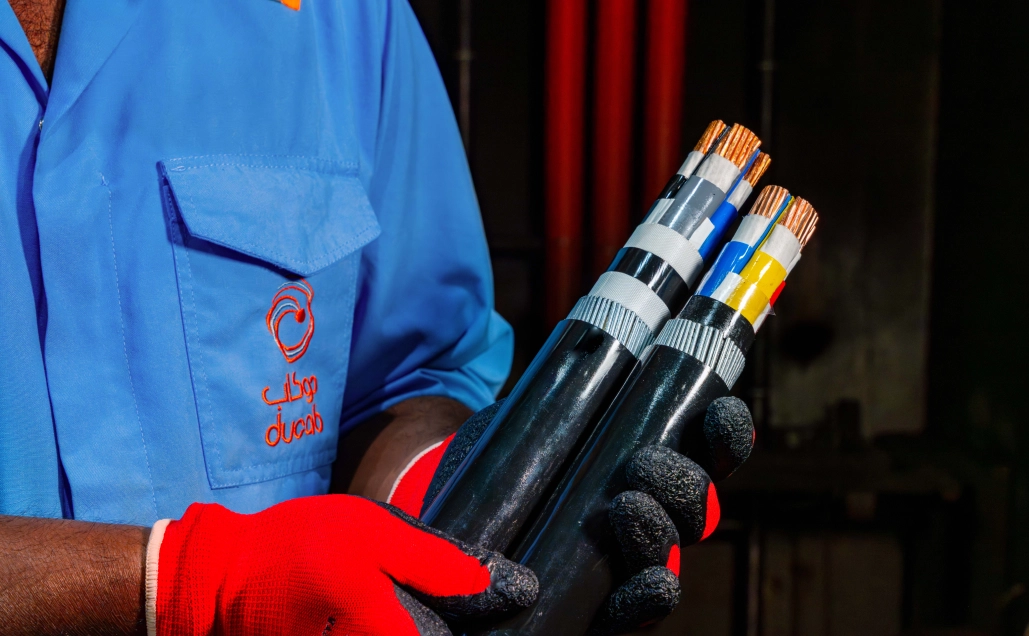
Armoured cables are widely used in commercial and industrial infrastructure projects. They feature a protective layer of steel or aluminium wires wrapped around insulated conductors, providing strong resistance against impact, pressure, and environmental stress.
Steel Wire Armoured (SWA) cables are commonly used for underground and outdoor installations, while Aluminium Wire Armoured (AWA) cables are typically used in single-core systems where magnetic interference must be avoided.
Common Uses:
- Power distribution in commercial and industrial buildings
- Outdoor and underground installations
- Environments with higher risk of mechanical damage
- Infrastructure, healthcare, and data center projects
Tray Cable (TC): The Industrial Organizer
Tray cables are designed to run through cable trays and raceways, making them ideal for large-scale environments where organization and scalability are critical.
Common Uses:
- Machinery and equipment power supply
- Lighting systems in large buildings
- Control and automation circuits
Tray cables can perform reliably in both indoor and outdoor environments when properly rated.
XLPE Insulated Power Cables: The Modern Standard
Cross-Linked Polyethylene (XLPE) insulated cables are widely used in modern commercial systems due to their high thermal rating, strong electrical performance, and resistance to moisture and chemicals.
They can operate at higher temperatures and support higher electrical loads while maintaining long-term reliability.
Common Uses:
- Power distribution networks
- Large commercial buildings and industrial facilities
- Low- and medium-voltage applications
- Infrastructure and energy projects
Low Smoke Zero Halogen (LSZH) Cables: Designed for Safety
LSZH cables are specifically designed for environments where fire safety and occupant protection are critical. In the event of a fire, they emit minimal smoke and no toxic halogen gases, improving visibility and reducing health risks during evacuation.
Common Uses:
- Airports and transportation hubs
- Hospitals and healthcare facilities
- Shopping malls and commercial complexes
- High-rise buildings and public infrastructure
6 Critical Factors That Must Influence Your Choice
Choosing the right cable isn’t guesswork, it’s a structured decision-making process.
1. Electrical Load: Voltage, Ampacity & Voltage Class
This is the heart of cable selection.
- Voltage Rating: The cable must match or exceed system voltage to prevent insulation failure.
- Ampacity: The cable must safely carry the required current without overheating. Undersized cables can lead to overheating and potential fire hazards.
- Voltage Class: Commercial cables are categorized by voltage levels:
- Low Voltage (LV): Used for internal building wiring and distribution
- Medium Voltage (MV): Used in larger facilities and external power distribution
Selecting the correct voltage class ensures safety, efficiency, and system compatibility.
Accuracy here is critical, there is no margin for error.
2. The Installation Environment: Where Will the Cable Be Used?
Cables must match their environment to ensure long-term reliability.
- Air-Handling Spaces: Certain environments require cables with low smoke and flame-retardant properties to meet fire safety standards.
- Wet or Damp Locations: Use cables specifically rated for moisture exposure.
- Sunlight & UV Exposure: Outdoor cables must have UV-resistant insulation to prevent degradation.
Where the cable is installed determines how long it will perform reliably.
3. Conductor & Insulation Materials
Material selection affects performance, cost, and durability.
- Copper Conductors: High conductivity, reliability, and durability—widely used in commercial systems
- Aluminium Conductors: Common in large feeder systems; cost-effective but require proper installation
Insulation Types:
- Thermoplastic insulation (commonly used in various regions)
- XLPE insulation for higher performance and durability
- Region-specific types (such as THHN or XHHW, commonly used in North America)
Materials define how the cable performs under operational stress.
4. Compliance with Standards and Certifications
Compliance is essential for safety, legal approval, and operational reliability.
- International Standards: IEC and other regional standards govern cable performance and safety
- Local Regulations: Always verify country- or city-specific electrical requirements
- Certifications: Look for recognized certifications (such as IEC, BS, or UL depending on the region) to ensure quality and compliance
If a cable isn’t compliant, it isn’t a choice, it’s a liability.
5. Fire Performance: A Critical Safety Requirement
Fire performance is a key consideration in commercial environments, particularly in high-occupancy buildings.
Important characteristics include:
- Flame-retardant cables that limit fire spread
- Fire-resistant cables that maintain circuit integrity during emergencies
- LSZH cables that reduce smoke and eliminate toxic gas emissions
Choosing the right fire-rated cable improves safety and supports compliance with fire regulations.
6. Installation Method: How the Cable Is Deployed
Cable selection also depends on installation methods, which influence protection and performance.
Common methods include:
- Conduit systems for enclosed protection
- Cable trays for organized distribution in large facilities
- Direct burial for underground installations
- Duct banks for large-scale infrastructure and urban networks
Matching the cable type to the installation method ensures proper protection, heat dissipation, and long-term system performance.